The Physician–AI Synergy: why modern doctors must lead the AI wave
For patients: how good clinics use AI behind the scenes. For clinicians: what tools are actually entering Indian hospitals — as co-pilots, not substitutes.
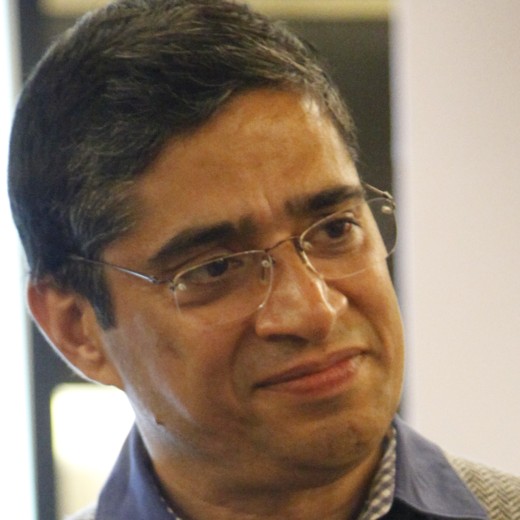
Kunwer Sachdev
Founder, doctorrating.in · 7 min read

Global capital and compute are packing more medical knowledge into systems that answer in seconds. That sounds frightening if you imagine a chatbot replacing your physician. It looks different — and more hopeful — if you ask how licensed clinics actually deploy clinical-grade AI next to a human who still examines you and signs the plan.
This piece is the counterpart toAI is not your doctor. That guide warns against unguided self-diagnosis from consumer chat. This one explains the other half:how responsible clinicians use specialised tools so diagnoses stay safer, queues move faster, and subtle findings get flagged earlier — while accountability stays with a registered doctor.
What patients should notice
When a hospital uses imaging AI, your scan may be triaged before a radiologist opens the queue — so a bleed, clot, or suspicious nodule is less likely to wait in a silent pile. When a clinic uses ambient scribing, the doctor may look at you more and at the keyboard less. When decision-support tools cite guidelines and trials, the conversation can move from memory to evidence without you becoming the experiment.
None of that means “the computer treated me.” It means the practice invested in co-pilots. You should stillverify who is registered, ask who owns the clinical decision, and refuse medicines suggested only by a public chatbot.
Consumer ChatGPT ≠ hospital AI on a PACS network. One entertains; the other is audited, scoped, and supervised.
The win-win: augmentation, not replacement
What humans still own
- Empathy and trust in the room
- Context, culture, and family dynamics
- Hands-on examination and procedures
- High-stakes ethical calls and consent
- Legal and professional accountability
What clinical AI adds
- Instant synthesis across huge literature and data
- Pattern flags beyond casual visual review
- Documentation and triage offload
- Consistency on checklists and interactions
- Time returned to the bedside
Fatigue, working-memory limits, and paperwork crush even excellent doctors. Engines that never sleep can cross-reference rare presentations, highlight radiomic gradients on CT or MRI, and draft SOAP notes from the visit conversation — so the clinician’s scarce minutes go to listening and deciding, not fighting the EHR.
What modern clinics are adopting
Below is an India-forward snapshot: platforms with real hospital footprint or clear clinical roles. Names change and approvals evolve — treat this as orientation, not an endorsement ranking.
| Category | Platforms | Clinical role |
|---|---|---|
| Chest & neuro triage | Qure.ai (India / global), Aidoc | Automated detection of TB, lung nodules, intracranial bleed on CT/X-ray |
| Evidence-based decisions | OpenEvidence, UpToDate AI | Point-of-care, peer-reviewed guidance & interaction checks |
| Ambient medical scribing | Sunoh.ai, Suki.ai | Visit conversation → structured clinical notes |
| Diagnostic hypotheses | DxGPT | Differential assistant for atypical or rare presentations |
Qure.ai & Aidoc — imaging that flags first
Integrated into radiology workflows (often via PACS), these systems can highlight critical findings — intracranial hemorrhage, pulmonary embolism, stroke signs, subtle fractures, TB patterns on chest films — so emergency teams move before a scan sits unread. Qure.ai has a particularly visible footprint across Indian hospital chains and public-health screening programs; Aidoc is widely known in global acute triage. The radiologist still reads; the AI shortens the dangerous wait.
OpenEvidence & UpToDate AI — evidence at the elbow
Instead of juggling a dozen journal tabs, clinicians query medical-grade assistants grounded in guidelines and trials for dosing, contraindications, and uncommon phenotypes. That is decision support — not a licence to skip examination or dump a chat transcript on a chemist.
Sunoh.ai & Suki.ai — eyes back on the patient
Ambient scribing listens (with consent and policy controls) and drafts H&P or SOAP notes. Patients feel the difference when the doctor is not staring at a monitor. Clinicians feel the difference when charting does not eat the evening.
DxGPT — rare-case thinking partner
For atypical presentations, hypothesis tools can widen the differential. They do not close the case. The physician still orders tests, rules out, and explains uncertainty — the part no model can ethically skip.
Beyond the hype: competence now includes AI literacy
Early failures — hallucinated citations, biased training data, brittle context — are being attacked with multimodal models, clinical fine-tuning, and retrieval-augmented pipelines that stay glued to approved sources. The gold standard is still a doctor who can prompt carefully, read confidence and limits, andaudit every output before it touches a prescription pad.
Medical competence in this decade is clinical acumen plus algorithmic literacy. Interns and seniors who treat AI as magic will be burned; those who treat it as a scoped instrument will raise the floor of care.
Ethical bar (India)
Under Indian medical ethics and professional norms, the treating registered practitioner remains responsible for diagnosis and treatment. Clinical AI should be transparent to patients when it materially shapes care, privacy-preserving, and never used to dodge accountability. If something goes wrong, you still have the right toroute a complaintand toverify credentials— software does not erase those doors.
Quick FAQ
Does this mean I should trust ChatGPT for medical advice?
No. Consumer chatbots are not the same as clinical-grade tools used inside hospitals under a licensed doctor’s responsibility. For symptoms and medicines, see a registered practitioner — and read our companion piece: AI is not your doctor.
How do Indian clinics actually use AI?
Common uses include radiology triage (e.g. Qure.ai on chest X-ray or head CT), evidence look-up at the point of care, ambient scribing so doctors type less, and decision-support for rare or atypical cases — always with a clinician who owns the final call.
Who is responsible if AI is wrong?
The treating clinician and the institution remain accountable. Clinical AI should flag, draft, or triage — not silently replace judgment. Patients can still verify registration and file complaints through official channels.
Forward-looking clinics will not choose “human or machine.” They will choose humans who know how to lead machines. Patients should demand that leadership — and still walk away from any screen that offers a tablet without a licensed name behind it.
Share this
Kunwer Sachdev
Founder, doctorrating.in
He built Su-Kam into one of India’s best-known inverter and solar brands, holds 100+ patents, and is building again — now backing ideas that put more power in ordinary people’s hands.
Related reading
- Second medical opinion in India — when and how →
- Hospital refuses medical records — what to do →
- How to check a hospital bill for overcharging →
- How to file a medical complaint in India →
- How to verify a doctor in India →
- AI is not your doctor. →
- Insured, but not protected →
- Well enough to leave. Not allowed to go. →
- Should justice cost ₹500? →
Need to act now?
General information only — not medical advice. Tool names and regulatory status change; confirm with your clinician and official sources. Do not start, stop, or change medicines based on this article or any chatbot. Disclaimer: Kunwer Sachdev has no association with Su-Kam Power Systems Ltd. in its current form, having ceased to be its Managing Director and Promoter following insolvency proceedings under the IBC, 2016 (NCLT resolution, 2019–2022).
Want a real doctor in charge — with or without AI?
Verify NMC registration for free, or read why consumer chatbots still aren’t a clinic visit.
Free tools · No paid rankings · You act in your own name